Showing posts with label rap. Show all posts

Saturday, April 28, 2012

The Last Missionary - Review

Given that Stephen the Levite had two of the dopest, most compelling and convicting contributions to Lampmode's recent The Church compilation -- the tracks Membership and Church Discipline -- it's appropriate that his long-awaited sophomore LP is heavily centered on that same subject. In fact, the title of the album, The Last Missionary, is a reference to the church, and the doctrine of the Church is expounded on throughout the majority of the album.

Over a luscious and lustrous beat, the album opens with The First Missionary, which is a reference to the Triune God's missional character as expressed in Genesis in the act of creation itself, but especially in God's presence in the Garden, dwelling with the first humans and delivering the 'protoevangelium'. This track seems to have had a foreshadowing in DJ Official's fantastic posse cut Not My Own, which features a verse by Stephen that covers similar ground.[1] Stephen delivers some stunning rhymes packed with rich theological content and structural beauty, carefully crafting his syllables with alliterative affects.

There are two scriptural analogies which primarily define the doctrine of the Church: the Church as the Body of Christ and the Church as bride, Christ as bridegroom (or Christ as the eschatological Adam and the Church as the eschatological Eve). While Stephen utilizes both in various ways throughout the album, on the track Voltron his verse brings the two together. Voltron is, obviously, a venerable cultural touchstone for hip-hop which symbolizes separate, distinct individuals coming together to act cooperatively toward one common mission or purpose, with the analogy to the Body of Christ being obvious. But as I said, Stephen really effectively brings the two analogies together in his verse: "[Adam] even cleaved to Eve, she's his own now / And he is hers, Jesus and the Church be the pronouns (Engaged) / Committed to mission till the big day / The bridegroom will arrive soon, until then wait (Harvest) / Workin' like the first in the garden / The last Eve, sowin' that seed, she is all of us".

On another posse cut, Wrote It This Way featuring Lampmode label-mates Timothy Brindle and Hazakim, the emcees explore the ways that the Body can (and must be) diverse, while not being divided. Brindle delivers a typically stellar verse which celebrates the multiethnic nature of his own family unit as a microcosm for the truth that God sent His Son for all people, of every tongue, tribe, and nation. Stephen's verse might be even better and he sets it off with a flourish: "Christ's blood has identified us / Doesn't uniform us, but it unifies us / We can be diverse but still not be divided / We would be deformed if everyone was like us". He goes on to excoriate the notion that 'unity' means arbitrary conformity to some cultural identity, rather than unity in Christ as the distinct, diverse people that He created us to be.    

The theme of Christ as bridegroom and the Church as bride is explored further on tracks such as S.O.S. and Beauty and The Beast. The former track does so implicitly as Stephen writes a song that is about his literal love and appreciation for his actual wife, but in the context of the album the track gains added depth, given what the institution of marriage is meant to teach us about the Church. The latter track explores the theme in a more explicit manner, telling the story of Christ and the Church in an extended metaphor.

The titular, final track of the album reflects the opener, and an analogy is thereby drawn between God's missional character and that of the Church, the last missionary. Stephen releases a torrent of sensational rhymes over a slamming beat while bringing the themes of the album to fruition in spectacular fashion.  

Throughout the album the aesthetic and artistic qualities are absolutely top notch. On the rapping side of things, Stephen's lyricism is incredible as he packs intense doses of luminous content into his bars while marshaling intricate rhyme schemes and a breathless, masterful flow. Just listen to the way he absolutely dismantles a track like Reign & Rebellion -- phenomenal.

The beats are excellent for the most part, and range from old school, stripped down tracks like Enter:missionary and Fight Club to more complex, robust tracks which dominate the album. The delicious cherry on top of all this is the fact that the album is almost entirely devoid of any R&B or otherwise sing-y choruses, and often features insanely ill turntablism instead, such as on Rehoboam and Dividing Lies. If you're fond of the brand of raw, 'East Coast', grimy, boom-bap that has always been my muse, then this should suit your tastes ideally as well.

While I enjoyed Stephen the Levite's first album To Die is Gain, I felt it was a little rough around the edges and the production was somewhat lacking. Here he steps into the forefront of currently working hip-hop artists -- holy or secular -- with a well-polished, intelligent, challenging and edifying record that keeps your head nodding incessantly, both to the beat and in agreement. Not only that, but he has gone the extra mile and successfully crafted a true album, with a unified theme and message, and one that is vitally important for the world today: the Church is Christ's physical representation on Earth and the means for extending God's Grace to the world and establishing his kingdom, so it's incumbent upon us to repeat the act of Grace shown at the cross, and be salt and light to a world in need of redemption. Or, to quote Stephen one final time: "If you’re a Christian then you’re a member of / His physical witnesses sent to finish His mission up / Paul would call us His body with many limbs and functions / workin’ and servin’ till He returns in the endin’ but / Give it up! / until His Kingdom comes and the mission's done / we volitionally and sacrificially give Him us / (Get ‘em bruh) This is something we struggle with and it's tough / but much is required from us because we’ve been given much".

-------

[1] As a somewhat nitpick-y theological aside: Both Phanatik on Not My Own and Stephen on The First Missionary speak of God in mutable terms i.e. pre-creation 'conferencing' within the Godhead and 'coming to decisions' about how to create, or how to solve some problem etc. Given the limitations of language and of the rap format, I don't have a huge problem with the artistic license invoked here, but it is technically incorrect; because of God's immutability any talk of Him 'coming to decisions' is an anthropomorphism. This is not to deny the existence of divine counsel or community within the Godhead, only to affirm God's immutability.

Saturday, February 11, 2012

Elation Foundation - An Exposition on The Beatitudes

As I continue to delve into the world of Holy Hip-Hop, I recently have been listening to the album Elation Foundation by Evangel (of the group Christcentric). As I mentioned in an earlier post on Holy Hip-Hop, Evangel is a stellar emcee, who I would put as one of the top three best Christian emcees -- and probably just emcees period -- alongside Shai Linne and Timothy Brindle. I was first introduced to his work with Christcentric, which was all excellent, but it took me a while to get a copy of his solo albums. Now that I have, they are nothing short of amazing.

Evangel seems to be the archetype of what might be called the "expositional rapper". The first album I heard him on was Christcentric's Ephesians Project, which is an album-length exposition on the book of Ephesians, with each song covering a corresponding chapter and set of verses. His first solo album is titled Expository Journey, and his second solo album -- Elation Foundation -- is an exposition of The Beatitudes from the Sermon on the Mount. He structures the album so that each track is an exposition on each of the beatitudes. Here are the beatitudes, from Matthew 5 of the NIV:

1 Now when Jesus saw the crowds, he went up on a mountainside and sat down. His disciples came to him, 2 and he began to teach them.

    He said:

 3 “Blessed are the poor in spirit,
   for theirs is the kingdom of heaven.
4 Blessed are those who mourn,
   for they will be comforted.
5 Blessed are the meek,
   for they will inherit the earth.
6 Blessed are those who hunger and thirst for righteousness,
   for they will be filled.
7 Blessed are the merciful,
   for they will be shown mercy.
8 Blessed are the pure in heart,
   for they will see God.
9 Blessed are the peacemakers,
   for they will be called children of God.
10 Blessed are those who are persecuted because of righteousness,
   for theirs is the kingdom of heaven.
11 “Blessed are you when people insult you, persecute you and falsely say all kinds of evil against you because of me. 12 Rejoice and be glad, because great is your reward in heaven, for in the same way they persecuted the prophets who were before you.

And here is the tracklist for Elation Foundation, and the beatitude or verse which each song corresponds with:

1 Elation Foundation - (verse 1)
2 Mr. Smiley Face - (skit)
3 Bankruptcy Department - (verse 3)
4 Savings and Moans - (verse 4)
5 Soul Beneficiary Division - (verse 5)
6 Food Court - (verse 6)
7 Still The Elevator Man - (skit)
8 Mercy Mutual - (verse 7)
9 Pure Hearts - (verse 8)
10 Rejoice! - (verse 12)
11 Shalom Factory - (verse 9)
12 H.R. Dept. (Haters Revile, Heavenly Reward) - (verse 10)
13 Hilltop Housing - (verses 13-14)
14 Elation Summation (Outro summary)
15 Immigration Services (bonus)

As you can see, the title of each song reflects the beatitude that it covers. It's one thing to make a clever tracklisting, but what's extremely impressive is that the songs themselves have vibrant content that  faithfully expound upon each beatitude, in artistic ways. For example, on the track Food Court Evangel utilizes a running food and water metaphor throughout the song, relating them to Biblical truths that deal with hunger, thirst, food and water: "I seek to read, honestly a truth pursuit / Eatin' meat that ironically produces fruit / Because you faced terms / Were crushed for us, if we trust with faith firm / He'll flush the tapeworm". Concluding the song in this way: "Compliments to the Chef / There's no confidence in the flesh, leading to consequences of death / My etiquette is straight / I won't forsake the fellowship of saints / Now you imitate, go ahead and fix a plate."

Evangel's verse on H.R. Dept (which also features the other members of Christcentric), is among the better verses on the album and is worth quoting in its entirety:
Realizing the cost of the cross and the weight of it's worth
The world hates me, of course, 'cause it hated you first
If they're armed heavy with guns
There's nothing new under the sun, their stunts already been done
They're set to cry with their loud antithesis
Yet the scriptures testify with a cloud of witnesses
All the beatings they had, didn't silence their voice
They rejoiced and were exceedingly glad
When Jesus addressed with candor
They said he was demon possessed with slander
And it might get worse, John writes this verse
How Cain slew Abel for his righteous works
They won't leave us alone, Stephen was stoned
Looked up and saw you standing at the seat of your throne
Yeah, we endure cause we see the deal
It don't dare compare with the glory to be revealed 
The crowning jewel of the album comes just after all the beatitudes have been covered. On Hilltop Housing, which features a slamming sonic arrangement, Evangel discusses what it means for the church to be a "city on a hill that's not hidden", and the importance of righteousness, church discipline, and practicing what we preach. "As a body we need confrontation / We should be a congregation of consecration / Do we not see this? We call ourselves Jesus' / Body while parts of it look like prosthesis / These claims are unjust / When we're guilty of the same sin, let it not be named among us"

It should go without saying, if you've heard any of Evangel's work, that the rhymes throughout are superbly crafted and are sharply focused on whatever the topic at hand is. His wordplay and rhyme schemes are often extremely intricate, with each listening producing a greater appreciation for the amount of work that goes into the writing process. And his flow is masterful to boot.

The production on the album, save one or two soft beats, is hard-hitting and boom-bappy which suits my aesthetic preferences. I could have done without a few of the choruses, most notably on Bankruptcy Department and Pure Hearts, but since I'm primarily a fan of grimy, East Coast, beats-and-rhymes, boom-bap rap music -- which often finds hooks to be superfluous or detrimental -- that should come as no surprise. "Just get to the rapping", me and my brethren always say.

Evangel is one of the premiere rappers alive and working at this moment, and this is an extremely creative, Christ-centered, powerful album that is substantive and edifying for Christians and which demands attention from any serious hip-hop fan.

Monday, January 30, 2012

Timothy Brindle's Christ Triad

As a newcomer to the Lampmode records, high quality, Christcentric, lyrical theology rap scene I've recently been blessed with a wealth of recorded material from the last 6-8 years or so with which to occupy my music listening time. The two albums that have dominated my listening time have been Shai Linne's The Attributes of God and Timothy Brindle's Killing Sin. Both immediately struck me as monumental artistic achievements -- easily outclassing any of their anemic secular counterparts from the last decade -- as well as legitimate theological treatises with content so relentlessly focused and sound that it could stand alongside other well-regarded works in the Reformed theology tradition. There's much that could be said about both works, but in this post I want to focus on a triad of songs from the Killing Sin album: The Faithfulness of Christ, The Humility of Christ, and The Excellency of Christ.

Killing Sin is best described an album-length meditation or exposition on the process of sanctification that God performs in the lives of His followers. The focus on sin is intense and Timothy faithfully relates the extent to which God abhors sin, and even moreso in the lives of His followers. As Brindle says on the track The Sinfulness of Sin: "In a sense when a Christian sins / It's more sickenin' than the sins of wicked men  (why?) / 'Cause we've tasted His goodness as recipients of Grace / So every time we sin it's like we're spittin' in His face / If Christians are no longer trapped in its bondage / Why, like dogs, do we go back to our vomit?" Throughout the album Timothy attempts to artfully relate just how detestable sin is to God, while also outlining the ways that Christ's work on the cross and His Resurrection enables us to "put to death our crooked flesh" through the power of the Holy Spirit. None of this really does justice to the depth, breadth, and vibrancy with which the album addresses this topic, and, in any case, Timothy provides us with a kind of  thesis statement that does better than I can at summarizing the album's aim on The Intro.

It's within this context that these three songs are marshaled. The last two tracks -- Humility and Excellency -- are also the last two songs on the album, while Faithfulness comes a bit earlier in the album. The sequencing of the tracks was obviously done purposefully, and I think Timothy doesn't put Faithfulness at the end for two main reasons, though this is obviously speculation. First is that Christ's Faithfulness is mostly manifested in the way He stays by our side through our daily struggles. How He is trudging along besides us amidst the various difficulties and temptations of life, even when we fall and stumble. For this reason I believe the track is sequenced earlier in the progression of songs, placing Christ's Faithfulness within and among (though of course in no way separate from) our battles with sin, as reflected by the surrounding tracks which cover that topic. The second reason I think the sequencing makes a lot of sense is because the slot before Humility and Excellency is filled by the terrific Fix Our Eyes, which serves as a kind of turning point, a signpost to the climactic moments of the album.

Though Christ is strongly present throughout the entire album, the progression of the album is such that it works itself up and out of sin, into the radiant glory of Christ as depicted in the final three tracks where the focus on the person of Christ becomes utterly fixed, even though He was faithfully present all along.

On Humility, the best track of the album, Timothy turns his focus to the incomprehensibly amazing and loving act of God's condescension into finitude on our account. "If you seem confused with this / God passed through His own creature's uterus / I admit this is odd, but the Bible can persuade me / 'An omnipotent God crying as a baby?!'" The track is largely about the Incarnation, focusing on the Christmas narrative and God's decision to rescue humanity from our iniquity by becoming one of us and dying in our place: "What an awesome feat to drop so deep and cop His sheep / He didn't step down; He took a quantum leap / And I'm amazed how God, infinite in wealth / Put aside His fame, and limited himself / To time and space and eyes and legs / He died to save a violent race whose sins would bring em hell."

Lest the intensely, carefully crafted rhyme schemes be forgotten, I will bring attention to them here. As someone who has written rap lyrics -- very poorly I might add -- it's difficult to overemphasize just how well-crafted these rhymes are technically, or how incredibly they're delivered. With that artistic aside accomplished, let me get back to the content of Humility. I think I've said about all that I could about the track that it doesn't say better for itself, so I'll let Timothy's lyrics speak and just transcribe the last 20 bars of the song:

Slaughtered, bleedin', gushin', oozin' blood
The Father pleased to crush Him whom He loved
So He probably didn't even feel the crown and nails
He had to suffer more than that to bring down the veil
Our eyes are haughty and our lies are naughty
The Holy Christ bore our sins inside His body
Yeah His veins they burst, but no one's pain was worse
Cause the one who made the Earth became a curse
And He was one with the Father's essence
But on the cross, the God of heavens cut off His presence
So I can't share any language
That can rightly describe the Christ's despair and His anguish
So forever will I tell
In three hours Christ suffered more than any sinner ever will in hell
He who had infinite joy and pleasure
Became a man of sorrows so we could join forever
He took a cosmic plunge, put on some lungs
On the cross, became to God a sponge
To soak up His wrath
So the wicked wouldn't be sifted and blown into chaff

Um. Wow. It's really difficult for me to listen to this song without beginning to weep, mostly out of gratitude.

Finally we turn to Excellency. While Humility mostly focused on the Incarnation, it culminates with the crucifixion (as you can see from the above lyrics), and, as you might imagine, Excellency focuses on the Glory of the Risen Savior (accompanied by an appropriately triumphal sonic arrangement): "You're the Lion- yet the Lamb / You're divine yet you're a man / You're Messiah and 'I AM'/ You're triumphant in your plan / Resurrected in all power and might / Exalted in all glory and honor- the Father showered the Christ / Full time worshipers- forever we're employed / Christ came to give us the full measure of His joy."

And if you let the album repeat at this point we are brought full circle to the daily battles of believers with sin, which Christ's Resurrection empowers us to overcome. It's sometimes easy to forget that Christ died not only to save us from the penalty of death, but that He rose to give us His life, Eternal life which can begin living now if we die to our old sinful selves. But the real takeaway from the album is that dying to our sins and putting them to death isn't something we do once and are done with, but it is a continuous process in this life which can only be accomplished by fixing our eyes on the life, death, and resurrection of Jesus Christ.

If you liked something about this blog, I assure you that anything I've been able to convey is only a faint whisper of what this album has to say. Check it out for free on Spotify or purchase it at Lampmode's online store.

Wednesday, November 16, 2011

Lyrical Theology. Holy Hip-Hop. Reformed Rap.

If you know me or have read my blog, you know that theology and rap music are two interests of mine. They have almost always been distinct and separate interests, for me. While I had heard some good (and lots of mediocre and bad) Christian rap back in the 90s, and early aughts, none of it was extremely theological in character. And even the best Christian material I heard from those times wasn't among the best hip-hop music being made, in terms of the aesthetic and artistic quality. Around the mid aughts I stopped keeping up with newer rap music in general and didn't have any connections that would alert me of quality Christian rap that was being released, so the little amount of it that I had heard was all that I was aware of.

Last month Challies -- a reformed blogger-pastor -- posted something about Shai Linne's new album The Attributes of God, giving the album very high praise. As a hip-hop aficionado myself, I was highly skeptical as to the actual quality of the rapping and beats (I had never seen Challies post anything about hip-hop), even if the theological content was excellent, as Challies was claiming (I trusted him on that count). After giving the album a listen on Spotify, I was stunned. Not only was the rapping top notch quality, but the content was vibrant, coherent, intelligent, Christ-centered, and unrelenting. The first comparison that came to mind when listening to Shai Linne's album wasn't golden-era, mid-90s, boom-bap rap music (though stylistically, that is his heritage), but Reformed theologians! Not only was this Christian rap, but it was lyrical theology and it was brilliant.


As I had become largely calloused toward, and weary of, new rap music in general, this was a revelation on two levels: re-igniting my interest in new rap music, period, as well as acting as a portal into the Reformed Rap or Holy Hip-Hop world, which I didn't even know existed (outside of The Cross Movement). Two of my interests and passions were combined thereby creating a more intense love for both of them.

After listening to The Attributes of God -- which shares the title of, and is kind of patterned after, the book by A.W. Pink -- I went on to listen to a few more of Shai Linne's albums such as Storiez and The Atonement, which were excellent as well. After this, I listened to some material from a guy named Timothy Brindle, who was featured on a number of Shai Linne's songs and who seemed to be a phenomenal emcee. It turned out he had two albums to his name, The Great Awakening and Killing Sin, which were both excellent. Though it's a somewhat tired touchstone for comparison, Brindle is comparable to a Christian Eminem, in that they both made waves in the secular battle circuit, and stylistically they have similarities.

Another artist that had collaborated with Shai Linne was named Evangel, and since his couple of verses were incredible, I sought out some more music by him. There were no solo albums of his on Spotify, but he was a member of a group called Christcentric who had a newer album out called The Ephesians Project, which is a hip-hop-album exposition of the entire book of Ephesians. His songs and verses on there were great, as was his song Beautiful Church which was on the compilation The Church. Evangel is just a beast with a wicked flow (but not a wicked message, of course).

Discovering one new incredible hip-hop artist would have itself been a revelation. That happens very rarely, especially in the current climate of hip-hop, which is fairly dismal. Having been introduced to three incredible rappers, who all have a solid amount of material recorded and released already, was just that much more amazing. Essentially discovering a whole new genre, one that strongly appeals to my intellectual and spiritual interests, which can actually enhance my relationship with the living God, and a genre which all of these phenomenal, newly discovered artists are working within was just that much more incredible.

I know that sounds like a lot of breathless, overzealous, hyperbolic rhetoric for some rap music, but I should tell you that I'm a very cynical and critical hip-hop consumer. Even if these guys were praising God and glorifying Christ with sound theology, but they had weak beats and rhymes, it wouldn't do much for me. But the actual quality of the lyrics and the rapping catapulted all three of them into my upper echelon of living, working rappers.

Since this discovery, I haven't listened to much of anything else on Spotify except my Lyrical Theology playlist, which is quite extensive. Lampmode records, which boasts both Shai Linne and Timothy Brindle on its roster, has other artists who I haven't even yet given a proper listen, who may also be great. Stephen the Levite, for instance, had two great tracks on The Church compilation, and I haven't yet listened to his solo album in its entirety. So, even with the new universe of Holy Hip-Hop opened to me, and having already explored it heavily, there's still more to discover, not to mention whatever else God has in store in the future, working through these artists and new ones. Hip-hop is back on my radar and it's being used to glorify the ruler of heaven and Earth.

Sunday, October 2, 2011

Rapper Run-in Run-Down

In my last post I recounted an atypically fruitful discussion that I had on Twitter with the rapper Murs. Since I enjoy rap music, but disagree with the vast majority of the ideals expressed by rappers in their music -- and therefore on Twitter -- I'll often post (necessarily) pithy replies to their tweets.

Recently many of them posted messages regarding Troy Davis and Occupy Wall Street, and on both issues I find myself dissenting from the views that virtually all rappers are espousing -- namely that Occupy Wall Street is a good thing and that the execution of Troy Davis was an injustice. And so, as usual, I posted messages responding. But typically rappers don't respond to my responses for whatever reason (too busy, uninterested, unwilling to engage in debate, etc.), which is understandable and expected.

This week, however, I seem to have struck a nerve. Murs, Sole, and Saigon all engaged in stilted (due to Twitter's character limit) political arguments, and the producer Blockhead and the rapper Killer Mike also responded to tweets of mine, though not to engage in debate.

Saigon posted a tweet decrying the fact that the black and/or hip-hop community had already stopped discussing Troy Davis. He then tweeted "Where do we go from here?", to which I responded "Shoot cops in parking lots in broad daylight less often? It's a start." Though that retort is obviously sardonic, it does make a legitimate point, I think. Namely, that the "injustice" of the Troy Davis execution was nothing of the sort, and that the hip-hop community needs to stop making causes and martyrs out of those who should simply change their behavior if they want different results and treatment from the justice system. If the hip-hop or black communities make a cause célèbre out of every execution of a back man, even in unexceptional, ordinary cases -- as this was -- it will be hard to draw attention to true instances of injustice and racism. It's the Boy Who Cried Wolf conundrum. 

Saigon went on to make the point that the system was hypocritical because, while cop-killers get executed fairly regularly, cops who kill innocent civilians don't get executed ever (or very rarely). To quote him exactly: "okay smart guy, how many cops were executed for shooting innocent unarmed blackmen? Answer me that one... How many?"

I don't know the number, but I assume it's somewhere around 0-2, say in the last 50 years. But, I would argue, that's as it should be as cops killing innocent civilians happens extremely rarely, if ever. Even the cases that blacks typically cite as being instances of "cops killing innocents" you could count on one hand, and even with those the facts are usually in dispute i.e. it isn't clear whether cops really did kill an innocent person, or act inappropriately. But, even if we were to grant all of these cases, still, cops killing innocent black men in the streets is an exceedingly rare occurrence, and so executions of the perpetrators should also be exceedingly rare. Which is essentially what I tried to hint at in my next 140 character response: "Don't know.. Probably a lot fewer, since cops killing innocent ppl virtually never happens. Your point?", to which he replied "so U never heard of Sean Bell, or Amadou Dialling [sic] or countless others, u look like a grand wizard anyway. Beat it."

Of course there aren't "countless others". The others are highly countable and, as I said, could even be counted on one hand. And that's only alleged instances, and most of them have dubious evidence of police misconduct.

Meanwhile, Sole, of Anticon fame, was tweeting that CNN wasn't covering the Occupy Wall Street protest sufficiently, and that if Americans wanted the real story they would have to tune into Al-jazeera. I had seen reports consistently on every mainstream network I've watched in the last 3 to 4 days, so I'm sure CNN has had similar, reasonable levels of coverage.

I took this to mean that Sole believes that the Occupy Wall Street phenomenon is a very large, significant, important movement (when it's not, it's a bunch of over-privileged liberals without jobs, but with money, complaining vaguely and imprecisely about capitalism) that deserves more mainstream media coverage than it's receiving. After the first day or two of the media pointing out that, yes, there are people holding signs, shouting protests in unison, obstructing street traffic, having occasional run-ins with police, and they are concerned about wealth inequality, greed, corporatism, capitalism, etc. what more is there to say? The public knows you're there, we know what you're saying. And? There is no more story except to say "yep, they're still there." So minimal amounts of media coverage are logical and justified from a neutral media outlet, and large amounts of coverage reveal a particular ideology (mostly "America is bad") at play.

This is essentially what I said to Sole: "A small % of privileged liberals are protesting vaguely and imprecisely about capitalism? @CNN should extensively cover this why?" to which he replied "that's what they said about the Arab spring. And I ain't no &$%#ing "liberal." U stick to your fantasies, I'll stick to mine."

So he raises two issues:
1) Likening the Occupy Wall Street movement to the Arab Spring, an analogy I will happily accept in one sense, but on opposite grounds. The so-called "Arab Spring" actually was nothing of the sort, and was overblown by the media and various sorts of talking heads. So the media not making the same mistake this time around is evidence of the media learning from its mistakes, if anything. Then, of course, I could also simply point out that while there is an analogy that can be made, it's pretty limited. In many ways Occupy Wall Street is nothing like "the Arab Spring".
2) The semantics of "liberal", which he clearly doesn't understand. To prove he doesn't understand he goes on to say "the word weasel liberal is a weasel word. republicans are the ones who are liberal. i just want folks to kill what they eat." He seems to be conflating classical liberalism, which really does correlate with the values of the right, to what "liberal" has actually come to mean today -- and has meant for the last 40-50 years in popular usage -- which is essentially just "on the left of the political spectrum".  All academics on this subject recognize this distinction and shift in usage. Still, nothing I said really hinged on him being a "liberal" in the first place (even though he is one, as a matter of fact.)

After some uninteresting tangential exchanges, Sole concludes our discussion with: "its all good. i perused your blog to arrive at my opinion of you. its old white man [stuff] to me. we barbarians are at the gates". Not the most nuanced conclusion (though Twitter doesn't really allow nuance), but not especially objectionable either, really. My views have been shared by many an old, dead, white person. But the insinuation that "old" and "white" are synonymous with "bad" and "wrong" is indicative of the character of the shallow, leftist thought that Sole traffics in. Jel and Moodswing 9 made some great beats back in the day, though, so I'll still listen to his music.

Thursday, September 29, 2011

Don't Occupy Wall Street, Please

There has been a small, extended protest called "Occupy Wall Street" where protesters go to Wall Street, hold signs, shout messages without the use of megaphones in unison, obstruct workers and such. They seem to be upset at the greed of Wall Street, imagining that that is the source of the country's financial troubles, especially the woes of the poor.

The whole thing seems fairly absurd to me. The message of the group of protesters is broad and nebulous, but generally seems to be grounded in leftist, soak-the-rich, populist sentiment. But Wall Street didn't create the conditions that led to it making lots of money; Wall Street didn't hold the government hostage and demand bailouts at gun point, the government gave it up without being threatened; Wall Street didn't create or sanction growing "income inequality"; contrary to pop-wisdom, making lots of money doesn't have to come at the expense of someone else; the vast majority of Wall Streets profits have been made legally with no shady dealings. The types of things that Wall Street typically gets blamed for, such as the insanity of derivatives and the mortgage crisis, were legal and were invested in by people off Wall Street with no complaints while they were profiting. Not to mention being supported and incentivized by the government. For these and many other reasons, making Wall Street a scapegoat is pernicious nonsense. If you want to occupy anything, occupy Pennsylvania Avenue. The President and Congress literally gave away your money to banks and financial tycoons without your consent (whereas Wall Street invested your money with your consent, for the most part, and it just didn't work out).

I recently confronted a rapper that I'm a fan of -- MURS -- who was tweeting in support of the movement. It was a brief exchange, as Twitter exchanges must be, but since it ended up being productive in ways that conversations like this typically aren't, I thought that I would re-produce it for posterity:


  • MURS: #occupywallstreet is still happening pls check www.occupywallstreet.org and see what action is being taken for the 99% aka us.
  • Nathan Duffy: The 1% are not "us"? Who are they? If you won the lottery tomorrow would you still be part of "us"?
  • MURS: yes. Why do you feel I wouldn't?
  • Nathan Duffy: What separates [theoretical] you from the other 1%? Somewhere in the world there's someone who just won the lottery, yet you lump THEM in w/ everyone else in the top, so why can't I lump YOU who just won the lottery in with THEM?
  • MURS: I don't believe the 1% is about your income. I believe it is those driven by greed.
  • Nathan Duffy: If that's true then the % is much larger than 1% of the population.. it's more like 90% of it.
  • MURS: those with the income that are still driven by greed= the 1% but you right about the 90% that is the bigger problem!
  • Nathan Duffy: Fair enough.. Greed seems to be a human universal, I see no reason to single out Wall Street. Have an 'end greed' rally and I'm there!
  • MURS: true. I plan to visit and speak to them about exactly that. Still I support them taking action and making something happen, otherwise we would've never had a chat & that's what I believe will make change is when we all start 2 speak & find common ground.
  • MURS: thank u for engaging me sir.
  • MURS: a stand against greed. Is what #occupywallstreet represents to me. Shout-out @theillegit [ed: me] for helping me clarify that

For Murs the issue is simply greed, and Wall Street just happens to be a group of people who are good at being 'greedy'. I'm not a fan of greed, of course, but I would still disagree with the notion that people on Wall Street are especially or uniquely greedy. What if a trader on Wall Street donated 50% of his income to charity? Would you even know that he did? No, so greed is a matter that is largely inscrutable except within the complete contexts of individual's lives and actions, which only God has full access to. And is someone who is intensely greedy, but just happens to be poor, any better or worse than someone on Wall Street who is greedy? The poor may tend to have other vices than greed, but I would contend greed is just as prevalent throughout the classes, it just manifests itself in different ways. So if your problem is greed, why single out Wall Street? Take humanity at large to task.

Not that there isn't a substantial amount of greed on Wall Street. I'm sure that there is. My problem is A) the assertion that greed is unique to Wall Street and B) the notion Wall Street is primarily, or even largely, responsible for other people's economic misfortune.

Monday, July 25, 2011

The Art of Sampling

As hip-hop continues to sully itself in its allegiance with commercial viability -- over and above artistic expression -- the misconceptions that surround the art are widespread and understandable.

The venerable tradition of the sample, of the break beat -- a tradition that largely accounts for the origin of hip-hop music -- has been denigraded by lazy, inept, and uncreative practitioners. Many of those instances of lazy, uninspired sampling saw great commercial success, which in turn gave an impression to the masses that 'sampling' is when a hip-hop artist (like say, oh, I don't know, Puff Daddy), steals and recycles a song that was already a hit. Of course, this is precisely what Puff, and others of the same mold, did in fact do. The trouble is that this left an impression of sampling that is false.

Sampling can be done poorly, but it can also be done brilliantly, and it is a legitimate artform. Being a total layman when it comes to music, and only slightly better when it comes to sampling, I'm probably not the best person to explain this, but I know enough people (mostly older) who don't respect hip-hop or the art of sampling that I felt obligated to call  attention to the creative and artistic aspects of the practice. Here are a few things that the best samplers and beatsmiths do which the hit-jackers do not:

1) Crate-digging

Crate-digging is a term that, obviously enough, refers to the practice of scouring large collections of vinyl (most often soul, jazz, and funk records, but anything is fair game) for dope and elusive samples. Finding a nice piece of music that is easily recognizable, or is from a well-known artist, is already less imaginative then someone who goes diggin' in the crates and unearths an obscure gem. And once you find a choice record to sample from, there's still the matter of which part of the track will work best as a beat, and having the ear for this is a talent in itself.

2) Chopping

Chopping is manipulating a sample in a way similar to how a DJ might scratch a record, only chopping is typically done to create a 'loop' of music, often in 4-bar time structure which often repeats for much of the song. It's not easy to describe, so for an excellent example of first class chopping, listen to Memories Are Here To Stay by The Intruders, and then listen to what DJ Premier did with that sample on Common's Sixth Sense (and for extra credit check Here's What's Left by RJD2, which samples the same record in a much more straightforward manner, and without chopping, but also creatively and to good effect). But what Primo does with the record is so uttetly brilliant, you might not recognize the source of the sample even if you loved The Intruders! Though the art isn't primarily in disguising the source, but in the resultant piece of music, and if you can't see the genius and beauty in The 6th Sense, then hip-hop wasn't made for you.

Included as a sub-category here I should mention other aspects of manipulating the sample itself, such as filtering the sample, speeding it up or slowing it down.

3) Blending

Blending is another art that originated with DJ-ing. When DJ-ing it's the act of attempting to mix one record into another. Kind of like a musical segue. When crafting a beat from multiple samples it means making them fit together in a seamless and dope-sounding fashion. It can also be done as a transition between tracks on an album (for some superb track-to-track blending check out Saigon's latest record).

4. Layering

Just as you might suspect, layering is the art of adding elements on top of a sampled loop. Whether it be the bass and drum tracks, another sample, a synth or live string instrumentation, multiple layers can give a track a more robust, dynamic sound and is another artistic tool which beatsmiths can use to make a track more original. This practice isn't part of sampling per se, but it is something that is done to samples to transform them into something fresh and different.

Hopefully this has given you a rudimentary appreciation for the craft and art of sampling. If your perception of sampling was that it was simple musical theft, I don't blame you. If you've gained an interest in sampling there's no better way to further that appreciation by listening to some of the greats at it; RZA, DJ Premier, Pete Rock, Havoc, Large Professor, Alchemist, No I.D., Blue Sky Black Death, and many, many others. 

Saturday, May 21, 2011

Blue Sky Black Death and Hip-Hop's Horizon

Hip-hop is the only music that I've ever had a passionate inclination towards, though as it relates to music being released today, I don't have a passionate inclination towards any genre of music. Many enthusiasts of the genre have adopted the refrain that "Hip-hop is dead", and I can sympathize with these critics, but I wouldn't go that far.

The rap music that exists from the 90s and early 2000s still exists and will never die. If I only have that to listen to for the rest of my life, then I've got plenty to listen to. Not to mention that there are still hip-hop artists that put out brilliant material. Admittedly, they are few and far between, but they do exist and will continue to exist. So much of what is currently released is either -- in the case of mainstream hip-hop -- a cheap, commercial product made for mass consumption or -- in the case of the underground -- a watered down version of something that someone else has already done better. This doesn't mean that hip-hop has exhausted its creative boundaries, only that there is a lack of will to push them, for whatever reason. These are the broad-stroke trends anyway, as I have just mentioned, there are exceptions. 

One of those exceptions is the production duo Blue Sky Black Death (BSBD). They recently released Noir, the brilliant follow-up to their classic Late Night Cinema. These are works of instrumental hip-hop and this very fact in itself opens up a massive creative horizon, as instrumental hip-hop is largely a terra incognita. You have your DJ Shadows, your RJD2s, but for the most part instrumental hip-hop has never been very popular amongst artists or fans, which means that if you do choose to explore the genre's boundaries there is a near infinite space available to work with. This is true not only because few others have ventured into the terrain, but because of the inherent limitless possibilities of instrumental hip-hop. 

To an extent, traditional hip-hop (i.e. beat plus rapper) doesn't exactly have the same infinite horizon of creative potential because that form of hip-hop confines itself to a 4-bar rhythm structure. Rapping can take on a few variations in patterns and rhythms but is limited by the bar structure of the raps. Still, even within the confines of the bar structure, there is plenty of room for innovation lyrically, flow-wise, in terms of changes of tempos or intensity within a verse (see Nas on One Mic for an under-utilized instance of this) etc., so standard hip-hop music has no excuse for being static and lacking imagination. The key point here, though, is that instrumental hip-hop has no such constraints. It doesn't have to stay in a particular pattern so that a rapper can rap to it, it's utterly free to be as dynamic as it wants to be, and BSBD takes full advantage of this.

On Late Night Cinema, the duo established itself as a towering force in the eyes of hip-hop aficionados. The polyphonic soundscapes crafted by the team were breathtaking. Combining sampling with original instrumentation they created a sound that is really only possible within the genre of hip-hop, and they utilize it to startling effect. Noir seems to continue this trend generally, and has many moments of brilliance (Fire for Light and Farewell to the Former World among them), though perhaps fewer than Late Night Cinema had. I'm still digesting it and this isn't a review of Noir, but Noir has inspired me to break out and revisit BSBD's other work, specifically their production for rappers. 

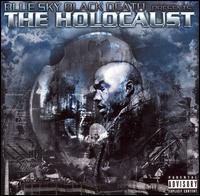
In addition to their purely instrumental work BSBD produced entire albums for Holocaust and Hell Razah, who are both Wu-affiliates. BSBD's style seems to have been influenced, at least somewhat, by Wu-Tang's (mostly RZA's) production sound, so it seems appropriate that they would do production for members of the Wu family. 

Holocaust (a rapper) debuted in the late nineties as a member of Black Knights of the North Star, a West coast Wu-Tang affiliate. After dropping verses on The Swarm compilation, a Killarmy album and the Bobby Digital album there was a great deal of anticipation surrounding Holocaust's future work. His verses were lyrically vibrant, his voice was ominous and his flow was breathless. At this point he didn't release anything for a while and when he did resurface it was in a drastically altered form. His once-flawless-flow was now replaced with arrhythmic rambling. His lyrics were still interesting and unique, but the rhymes were no longer nice, and the raps weren't structured well. What happened to him? Some speculate about drug use or a nervous breakdown of some kind. In any case, I lost interest in him as an artist at that point. Until I heard that BSBD produced an entire album for him. 

To return back to a point earlier I made about bar structure, Holocaust's flow and structure of his rhymes, after his change in style, largely ignore proper bar structure. This allows BSBD's production on the album to be almost as dynamic as their purely instrumental work, because Holocaust isn't abiding by bars anyway. The result is interesting, but Holocaust's rhymes don't do much but detract from BSBD's instrumentation. The actual content of the rhymes are intriguing, but they're so aesthetically displeasing that I'd much prefer to just listen to the instrumentals. I'm not sure whether an instrumental version of this album exists, but if it does I will seek it out and dispense of the version with the rapping.

Hell Razah is a member of the group Sunz of Man which is a subsidiary group of Wu-Tang clan consisting of Hell Razah, Killah Priest (one of my favorite rappers) Prodigal Sun, 60 Second Assassin, and Shabazz. I enjoyed the groups first album The Last Shall Be First, primarily because of the beats, Killah Priest and Hell Razah. In a sense I always thought of Razah as a poor man's Killah Priest, and I still feel that judgment is largely justified. His flow and his rhymes aren't anything special, though his lyrics are at times. 

In any case, BSBD also produced Hell Razah's debut solo album Razah's Ladder, which I would have otherwise not been very interested in. The result is a much more satisfying rap product than the Holocaust album. BSBD's production is as rich as usual, but is subject to the somewhat more traditional confines of rap beats, though they excel in this setting as well. Written in Blood is a good example of their ability to create an traditional, ill rap banger, while still displaying their signature sound. At other times, such as on Halos (which features the inimitable Crooked I) the rhythm section remains fairly static so as to accommodate the rapping, but the rest of the soundscape is just as dynamic as any of their evolving instrumental works. 

Hip-hop at large may be catatonic, it may persist in a vegetative stake, but the spark of life that animates the body is still present. Art is vibrant and indefatigable, and as long as humans aspire to transcend the boundaries  of their everyday circumstances and conditions through creative expression, art can't die. Which means that hip-hop can't die any more than painting, music, or film can 'die'. I'm grateful to the likes of Blue Sky Black Death for keeping hip-hop alive, not just for the sake of hip-hop at large, but for my own ability to continue to enjoy it. 

Wednesday, May 11, 2011

Republican Machine vs. Common (the rapper)

I'm torn. One of my top 2-3 favorite rappers from the 90s (not so much from the 00s) is in the news and is being disparaged by my fellow Republicans. Whose side to take?!

If you haven't heard Common has been invited to the White House by Michelle Obama to participate in a poetry forum, or some such event. Common, as far as popular rappers go, is a relatively unconstroversial figure and, if anything, is something of a posterboy for soft, positive, 'conscious' rap. Still, even rappers of this archetype can't avoid the occasional use of violent, homophobic or misogynistic rhetoric, if only employed metaphorically.

Larry Elder posted a link to an appearance on Def Poetry Jam by Common in which he referenced carrying a gun and cop killing on multiple occasions within a single verse, and there isn't much room to interpret him metaphorically. Add the instances of such lyrics to the fact that he has voiced support of Mumia Abdul-Jamal and attended Reverend Jeremiah Wright's church and you can see why conservative commentators would consider the man to be an absolute menace. Ideologically, I actually share their concerns. I've always enjoyed Common as an artist (especially from 1994-1997) but don't necessarily share much common ground with him in terms of ideology. For me his most offensive work is probably his (non-violent, 'positive') song "G.O.D." in which he pronounces faith in a kind of Unitarian, new-agey, 'spiritual' God (the first line that springs to mind is: "Curiosity killed the cat-echism / understandin' and wisdom became the rhythm / that I played to". Yuck.), though that's admittedly a matter of theological difference and not something that should count against him being invited to the White House.

As far as mainstream hip-hop goes, Common is about as non-violent, positive and uncontroversial as they come. Yet, I have to concede, he is still somewhat violent in his lyrics and a bit controversial in some of his social stances. Hip-hop is a rebellious, urban culture though, so this is hardly surprising that even their most benign are still considered to be dangerous and controversial by conservative America. Does this mean conservative America needs to lighten up, perhaps come out of their protective shell a bit? Or is it a sad testament to the fact that even hip-hop's best are still not very good? Probably a little bit of both.

In any case, I have to side with my Republican comrades on this one, in the end, simply because this is an ideological issue, not an aesthetic one.

Tuesday, September 21, 2010

Retrospect for 'Retrospect For Life'

The song "Retrospect for Life" is featured on the 1997 album by Common One Day It'll All Make Sense, the eagerly awaited follow up to his masterpiece Resurrection. The song features the vocals of Lauryn Hill singing lines from Stevie Wonder's Never Dreamed You'd Leave in Summer. The song was the first single released for the album. Living in 2010, an era where the first single to a rap album is almost required to be some catchy club-friendly tune which can easily translate into a ringtone, the idea of a mellow, soulful, conceptual track about abortion being the lead commercial single for an album seems almost inconceivable. And even in 1997 it was far from typical, but then Common isn't your typical artist.

The song is about a man reflecting on the decision that he made with his current girlfriend to abort their child. The first verse of the song is addressed to the aborted child; the second verse is addressed to the girlfriend. While I would hesitate to call the song 'Pro-life' it is certainly anti-abortion. For me there is no distinction between those two things, but some people believe that a woman should have a legal right to terminate a pregnancy, even though they believe it's the wrong thing to do. Such people might correctly be labeled 'anti-abortion', but not 'pro-life'. I believe such a position is confused, but that isn't the point of this piece. The point is that Common might merely be espousing an anti-abortion position rather than a Pro-life one.

In the first verse Common reflects on what it would have meant for him to have a son:

You would've been much more than a mouth to feed
But someone, I woulda fed this information I read
And someone, my life for you I woulda had to lead
Instead I lead you to death
I'm sorry for takin your first breath
First step, and first cry


And he goes on to address his own hypocrisy:

Nerve I got to talk about them [people] with a gun
Must have really thought I was God to take the life of my son


These lines are both clever and profound. In the first bar he's referencing the ideals that he professes in his own music. Namely the fact that he opposes much of the violence in popular rap music, as well as the violence he sees within urban culture in general. Yet here he is performing an act of the most heinous violence against his own son for his own selfish purposes. While the second bar is a brilliant double entendre.

The song is not intended to be an ideological treatise on abortion or to even comment on the arguments that surround the legal and moral aspects of the issue. Instead it's approached in a manner that comes off as introspective and self-searching rather than as demagoguery. The downside to this is that some of the very human thoughts and emotions contain some very pitiful rationalizations which the narrator wanders through. Such as: "But I wasn't prepared mentally nor financially / Havin a child shouldn't have to bring out the man in me / Plus I wanted you to be raised within a family / I don't wanna, go through the drama of havin a baby's momma / Weekend visits and buyin J's ain't gon' make me a father" While these thoughts and concerns are certainly understandable, one should rightly point out that they are concerns that should probably be addressed before impregnating someone. Plus they ignore the viable option of putting the child up for adoption. Ultimately, though, the rationalizations lose out as a decidedly anti-abortion conclusion is reached, most poignantly at the end of the first verse: "from now on I'ma use self control instead of birth control / Cause 315 dollars ain't worth your soul / 315 dollars ain't worth your soul / 315 dollars ain't worth it."

While the first verse dealt more with the past--with the act that had taken place and the narrator's remorse--the second verse is more about the present and future. Addressed to his girlfriend it's an exploration of their relationship and where it's headed. How the abortion brought certain issues and emotions to the surface which now have to be dealt with. Ideally these would be the type of things that people in a mature relationship would consider and discuss before choosing to have sexual relations, but in the real world they often don't come up until after the fact.

Happy deep down but not joyed enough to have it
But even that's a lie, in less than two weeks, we was back at it
Is this unprotected love or safe to say it's lust
Bustin, more than the sweat is somebody you trust
Or is it that we don't trust each other enough
And believe havin this child'll make us have to stay together
I want you in my life cause you have made it better
Thinkin we are in love cause we can spend a day together?
We talkin spendin the rest of our lives
There's too many black women that can say they're mothers
but can't say that they're wives


The strength of the song is the personal, probing depth of the perspective that is taken. Rather than addressing the issues in a detatched or external way, they're addressed from from within. Its scope isn't limited to the question of abortion itself, but includes the nature of family, relationships, love etc. and how they are all interrelated. It's a powerful and poignant exploration of the abortion issue from a human perspective, with all the imperfection that that entails.

Tuesday, November 17, 2009

Top 10 Albums of the Decade

(For all intents and purposes read as 'Top 10 RAP Albums of the Decade', as I know nothing else)


1. Float - Aesop Rock
2. The Cold Vein - Cannibal Ox
3. Labor Days - Aesop Rock
4. Shadows on the Sun - Brother Ali
5. Supreme Clientele - Ghostface Killah
6. The Lost Tapes - Nas
7. Madvillainy - Madvillain (MF Doom + Madlib)
8. Stillmatic - Nas
9. Lucy Ford - Atmosphere
10. The Blueprint - Jay-z

Honorable Mention: I Phantom - Mr. Lif, Fantastic Damage - El-p, ISWYD - El-p, MM FOOD - MF Doom, Marshal Mathers LP - Eminem, MOP - Warriorz, Common - Be, Clipse - Lord Willin, The Black Album - Jay-z, APOS - Cunninlynguists, The Offering - Killah Priest, Stankonia - Outkast, Saul Williams - Amethyst Rockstar, None Shall Pass - Aesop Rock, and probably some I'm forgetting